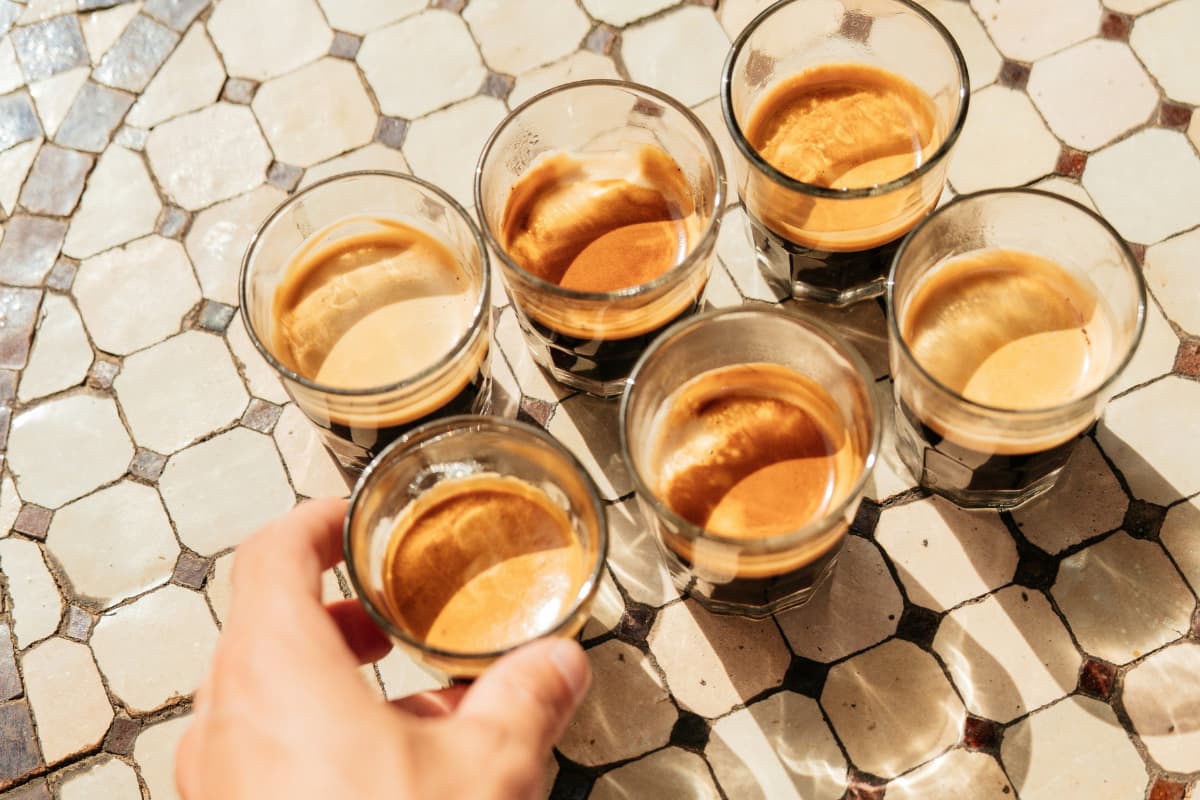






 Tiny cups of espresso land on the table. You take a sip, wondering if you really need to "slurp" like your favourite specialty coffee YouTuber (you don't, but it can help!). One tastes bright and fruity, another is rich and chocolatey, and the third has something completely unexpected and interesting going on.
They're all espresso, but they couldn't be more different from one another.
This is an espresso tasting flight, and it lets you explore just how different coffees can taste depending on their origin, processing method, and roast.
What Is an Espresso Flight?
Have you ever done a wine tasting at a winery? Or ordered a beer flight from a brewery? If you have, then you're already familiar with the idea behind a coffee flight tasting.
Basically, it's a fun way to try a range of espresso beans side-by-side.
Just like when you taste wine or beer, each espresso shot in a flight has distinct qualities and characteristics. Think single origin espresso versus a blend. Differences in the coffee processing method. And variations in roast level. In Eclipse language, this means exploring the differences between Bright, Balanced, and Bold.
With an espresso flight, you're tasting pure espresso. No milk. No sugar. Nothing that can interrupt the shot's unique balance, flavour, and mouthfeel. You taste each shot, usually two or three, side-by-side so you can compare them directly. See if you can detect any differences!

Can You Have Milk With Your Espresso Tasting?
All that being said, some specialty coffee shops do offer milk-based flights.
Instead of receiving two to three cups of stand-alone espresso, you're presented with several small milk-based espresso drinks. Milk changes the texture, softens the strongest flavours, and creates a different experience for the drinker. But that doesn't make it bad! It's just different.
In fact, latte flights can help you learn, first-hand, how milk interacts with espresso. Wondering if you should (or shouldn't) add milk to your espresso? We have a blog post covering this in detail! Should You Put Milk in Your Coffee? A Specialty Coffee Roaster's Honest Take
Why Is This Trend Taking Off?
The short and sweet answer? Everyone is getting really excited about coffee. Especially in Canada. Specialty coffee culture in Canada has grown significantly over the last decade, driven by the third wave coffee movement and a new generation of coffee drinkers who want more than just a caffeine fix. And we love it.
People don't just want to be told that an Ethiopian natural tastes different from a Colombian washed. They want to understand what they're drinking, know the story behind every cup, and taste the difference between origins, processing methods, and roast profiles for themselves. And an espresso tasting flight is the perfect format for this kind of curiosity.
The rise of experiential coffee culture (cupping sessions, single origin menus, and roast date transparency) has created the perfect conditions for espresso flights to…take off.
What Do You Actually Taste in an Espresso Flight?
All espresso is a balance of acidity, sweetness, and bitterness. But there's much more to tasting espresso than simply deciding whether a shot is sweet or bitter! Body, flavour, and aftertaste all have a part to play in the experience of specialty coffee.
Acidity
Acidity is the bright, lively quality that can make an espresso taste fresh, crisp, or fruity. You'll typically notice it along the sides of your tongue. Some beans have a gentle, citrus like tang, whereas others are sharper and more pronounced.
As you taste, ask yourself: what kind of acidity is this? What does it remind me of? Lemon? Green apple? Berries?
The type of acidity can give you your first clue about the coffee's flavour profile. If you love an acidic, fruity espresso, our Bright Coffees will be perfect for you.
Sweetness
If there's no sugar in your espresso, how can it taste sweet? Even though pure espresso contains no added sugar, the combination of its natural compounds (which can be enhanced or subdued during roasting and brewing) creates an impression of sweetness.
During an espresso tasting, you may encounter flavours that remind you of caramel, chocolate, maple syrup, biscuits, or ripe fruit. We perceive these tasting notes as sweetness.
Bitterness
When we brew espresso at our cafe in Canmore, we're working towards a sweet, balanced shot. It shouldn't taste unpleasantly bitter… but bitterness is still a natural part of coffee. (Fun fact: caffeine is a naturally bitter chemical compound!)
Acidity and sweetness balance the bitterness, so the flavour is complex, layered, and pleasant.
Bitterness is often most detectable in the finish or aftertaste, lingering on your tongue after you swallow.
Body
Body (also called texture, mouthfeel, or weight) describes how the espresso feels in your mouth rather than what it tastes like. Does it feel light and delicate, almost like tea or water? Is it silky and medium-bodied, like skim milk? Or is it thick, rich, and chewy, more like full-fat milk or yogurt?
Lighter espresso is often described as "juicy," while medium is called "syrupy." Full-bodied coffee feels "heavy."
Different espressos can have dramatically different textures, making this an interesting characteristic to watch out for in an espresso flight.
Flavour (Tasting Notes)
Flavour hits your palate immediately. You're met with hints of floral, bursts of fruit, or the warmth of nuttiness. Depending on the espresso flight and how trained your taste buds are, you might be able to detect a variety of different tasting notes.
Learning to read tasting notes is one of the most rewarding parts of specialty coffee, and an espresso flight is one of the best ways to train that skill. There's a whole flavour wheel of possibilities, broken down into broader categories and then very specific tastes.
- Fruit: citrus, tropical fruits, dried fruit, berries, jam
- Fermented: sour notes, alcohol
- Floral: rose, jasmine, teas
- Sweet: vanilla, brown sugar, maple syrup
- Nutty: chocolate, molasses, nuts
- Roasted: tobacco, malt, grain
- Vegetale: olive oil, vegetables
- Earth: woody
Tasting notes are about what the coffee reminds you of. None of these ingredients are actually in the espresso. They're merely compounds that your brain identifies as being similar to something else. It's really up to your interpretation.
Aftertaste (Finish)
The aftertaste is exactly what it sounds like: what you're left with after you swallow the espresso. Before reaching for the next shot in the flight, take a moment to notice what remains at the back of your mouth and along your tongue. Is it sweet? Chocolatey? Fruity? Bitter? Clean and refreshing? Unpleasant?
The finish can change what you think of the espresso. Don't rush past it. The last few seconds tell you just as much as the first sip.
How to Taste an Espresso Flight: A Simple Guide
Trying an espresso flight for the first time? Knowing how to taste espresso properly can make the experience much more rewarding. You don't need to be a coffee expert. Just slow down, pay attention, and give each shot a chance to show you something different.
- Start with the lightest, brightest espresso and work toward the darker, bolder coffee.
- Try washed coffees first, followed by fermented and natural processes.
- Reset with water between shots. Milk can coat your mouth and change how you perceive flavour.
- Let each shot cool slightly before tasting. As it cools, different flavours and characteristics can become easier to notice.
- Taste each coffee more than once. Your first impression might change as the temperature drops.
- Don't get too caught up in finding the "right" tasting notes. If you taste berries, chocolate, citrus, or something completely different, go with it.
- Beware of the sour-bitter confusion. The two can be surprisingly easy to mix up.
Remember: an espresso tasting is an exercise in curiosity. It's not about being right, wrong, or perfect. It's about following your taste buds and seeing where they take you. The more often you taste different coffees, the more familiar you'll become with the flavours, aromas, and sensations you're experiencing.
Whether you're an experienced coffee drinker or simply curious to taste your way through different coffees, a tasting flight is a great way to deepen your understanding and develop your palate.
Can You Do an Espresso Flight at Home?
Absolutely. An at-home espresso flight is a simple way to explore specialty coffee and compare how different coffees taste side by side. Pick two or three Eclipse coffees with different flavour profiles. Our Bright, Balanced, and Bold coffees are a great place to start. Pull each coffee as a single shot and taste them side by side, paying attention to differences in acidity, sweetness, bitterness, body, and flavour as the espresso cools.
If you're making espresso at home, a quality burr grinder can also make a noticeable difference. A consistent grind helps you pull more repeatable shots, making it easier to focus on how each coffee tastes rather than whether the extraction changed from one shot to the next.
Not sure which coffees to choose? Browse our full collection and look for variety. For your first home espresso flight, try one Bright, one Balanced, and one Bold coffee and see which profile you prefer.
Ready to Try a Specialty Espresso Flight in Canmore?
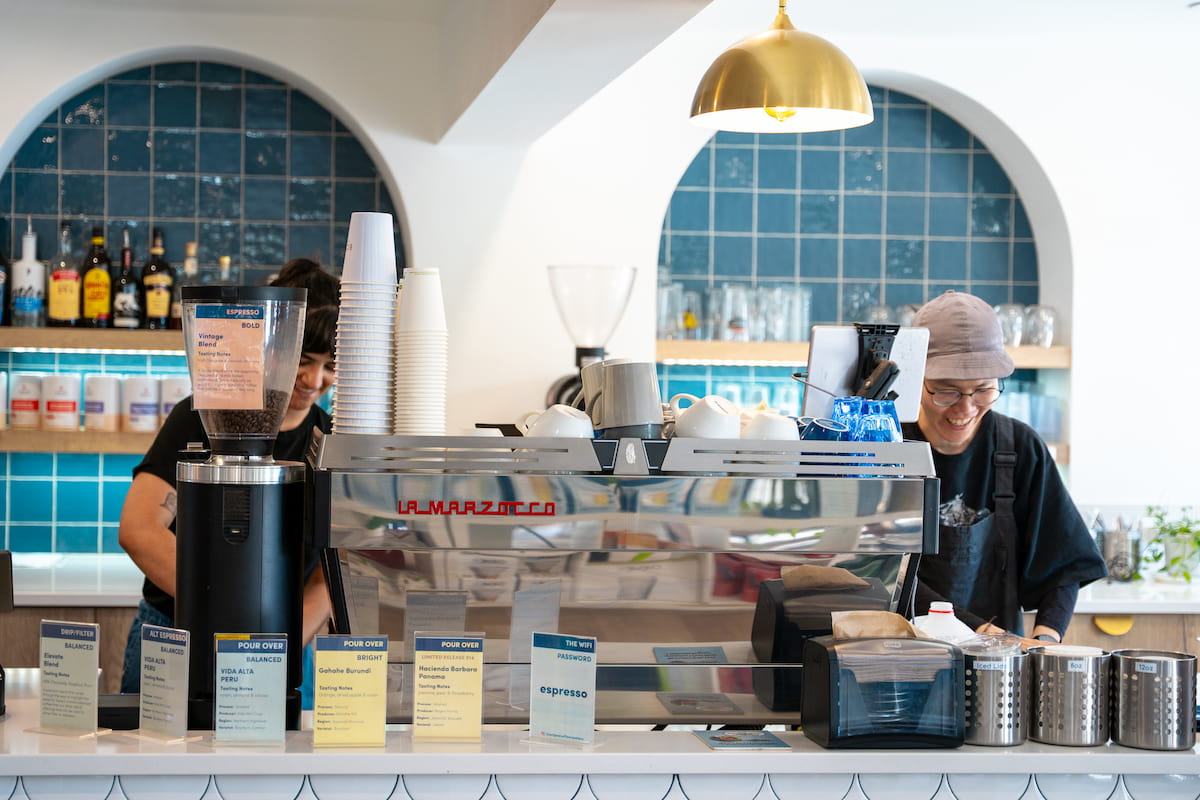
Curious how our beloved Vintage Blend compares to a single origin like the Gahahe Burundi? Visit one of our Canmore locations and ask your barista to pull these two shots for you. Since we have multiple coffees on rotation at Eclipse, there's almost always an opportunity to taste different espressos side by side.
FAQ
What is an espresso flight?
An espresso flight is a tasting experience where you sample two or more espresso shots side by side, featuring different specialty coffee beans, origins, processing methods, or roast profiles.
How many shots are in an espresso flight?
Most espresso flights include two or three shots, although there's no official standard.
Is an espresso flight the same as a cupping?
Close but no. Both are used to compare coffees, but a cupping is a standardized tasting method that industry professionals use to evaluate beans.
Can I ask for an espresso flight at any specialty café?
Not necessarily. Espresso flights are becoming more common in coffee shops, but they aren't a standard offering at every specialty cafe in Canada. If you're curious, it never hurts to ask your barista!
What coffee beans should I use for a flight?
There's no single coffee bean that's "best" for espresso. It depends on what you enjoy! Bright coffees can produce fruity, acidic shots, while Balanced and Bold coffees tend to offer deeper, sweeter, or more chocolatey flavours.
Ready to build your own espresso flight at home? Browse our current coffees → and pick three that look interesting. Bright, Balanced, and Bold is a great place to start.