





If you've ever heard the term "third wave coffee" and thought to yourself: "Waves? What waves? Like, waves of coffee?"
Then this article is for you.
Third wave coffee is one of those terms that gets thrown around in cafes and coffee blogs. But what does it actually mean? Is it just a fancy way to describe expensive coffee, or does it represent something bigger?
To really wrap your head around third wave coffee, it helps to know what came before. Coffee culture has evolved immensely over the last century, and third wave is simply one chapter in that much broader story.
The journey takes us from instant coffee and supermarket tins to espresso bars, specialty cafes, and the highly skilled baristas of today. Along the way, coffee transformed from a commodity consumed for caffeine into a craft beverage celebrated for its flavour, origin, and technique.
A Brief History of Coffee
People have been drinking coffee for a very, very long time. Long before the advent of iced lattes, espresso, and even cafes, caffeine consumption spanned the entire globe.
Pre-1800s
Coffee is believed to have originated in Ethiopia in the 9th century. According to legend, a goat herder called Kaldi noticed that his flock acted exceptionally energetic after eating small cherries from a particular tree. They bounced around, and didn’t want to sleep that night.
Kaldi shared this observation with the monks at the local monastery who were struggling to stay awake during evening prayer.
And so coffee was born.
From the 15th century onwards, coffee cultivation and consumption expanded to other regions of the world. It was imported from the Arabian Peninsula to Europe, and Europeans eventually started coffee plantations throughout Asia and the Americas.
By the 19th century, coffee was one of the most sought after commodities in the world.

The First Wave of Coffee: Commodity
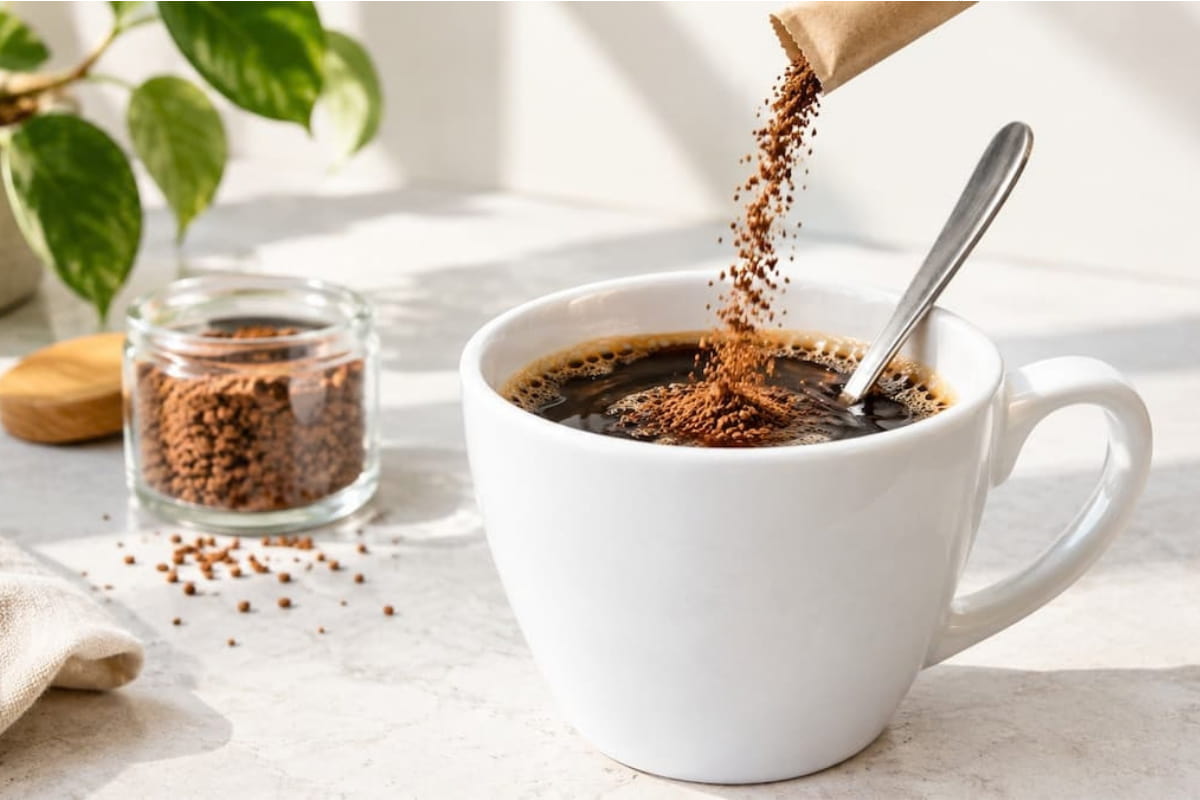
In the late 1800s, coffee began to change. It transformed from a luxury item to a mass product. Rather than savoured for its taste, coffee was consumed for its caffeine content using the most convenient brew methods available. This is when instant coffee arrived on the scene.
This era is characterized as "commodity coffee."
A few memorable coffee milestones through the years:
-
1870s: Chase & Sanborn (Boston, USA) first packages ground coffee in sealed tins.
-
1890: David Strang (Invercargill, New Zealand) invents instant coffee.
-
1900: Hills Brothers (San Francisco, USA) first offered vacuum packed pre-ground coffee.
The companies that most defined this time period are still household names today: Folgers and Maxwell House. They brought huge quantities of household coffee products (primarily pre-ground and instant) to a mass market. Coffee was now highly accessible and affordable.
But, by today’s standards, it wasn’t tasty. This coffee was dark, bitter, and was all about a low price point for caffeine, with next to no emphasis on the flavour or craft. It was often made from Robusta beans, rather than Arabica.

The Second Wave of Coffee: Cafés
The second wave started in the 1960s, and really picked up speed in the 1970s because of one specific brand: Starbucks.
It's impossible to talk about second wave coffee without talking about Starbucks. Although other chains played a part in this moment (which was, in actuality, kicked off by Peet's Coffee & Tea in 1966) Starbucks truly revolutionized the industry.
This was the real start of the modern café.
Starbucks (alongside Peet’s, and Caribou to a smaller degree)brought coffee to life in a new way. They promised both an experience and a delicious product. Cafés were designed to be comfortable and welcoming, a place for community as well as coffee. These are the first examples of cafés as third spaces.
Cafés started exploring higher quality coffee, publishing origins, and focusing exclusively on Arabica. Starbucks, in particular, introduced "specialty coffee drinks." Rather than sticking to cappuccinos like the Italians, drinks were made with syrups, drizzles, and flavourings. This, ultimately, led us to the Caramel Macchiato.
It's not a macchiato.
But it is a prime example of the Starbucks-ization of traditional Italian coffee. What the second wave gave consumers (the experience, the identity, the idea of coffee as something worth paying more for), changed the industry forever. Even if the coffee itself was still roasted dark enough to hide its origins.

The Third Wave of Coffee: Craft
Towards the end of the 1980s through to the early 2000s, the coffee world began to shift again.
The first wave was about commodities and convenience. The second wave revolved around the re-imagining of the café.
In the third wave, we got serious about craft.
Third wave roasters and cafés strove to elevate coffee by revealing everything that coffee could be. Not a drink of convenience, or a drink drowned in sweeteners and artificial flavours. They wanted to explore a wider range of coffee varieties and enhance the intrinsic characteristics of each.
Lighter roast profiles and single origin beans moved to the forefront, and were celebrated for what they could reveal about origin, altitude, and process rather than hidden behind 'dark roasts' and blends. Intentional coffee bean sourcing became an essential part of the craft.
The third wave also changed what happened at home. A new category of high-performance home equipment emerged, know as 'prosumer' gear, that sits between standard consumer products and full commercial equipment, designed for coffee drinkers who wanted café quality in their own kitchen. Think precision grinders, temperature-controlled kettles, and espresso machines built for the serious enthusiast.
This shift wasn't just about equipment or roasting. It was about transparency. Roasters formed direct relationships with farmers, and took the time to understand the climatic, geographic, and cultural aspects of specific cultivation regions. There was a higher degree of origin transparency. The industry finally started talking about ethical sourcing.
Third wave also redefined the role of the barista.
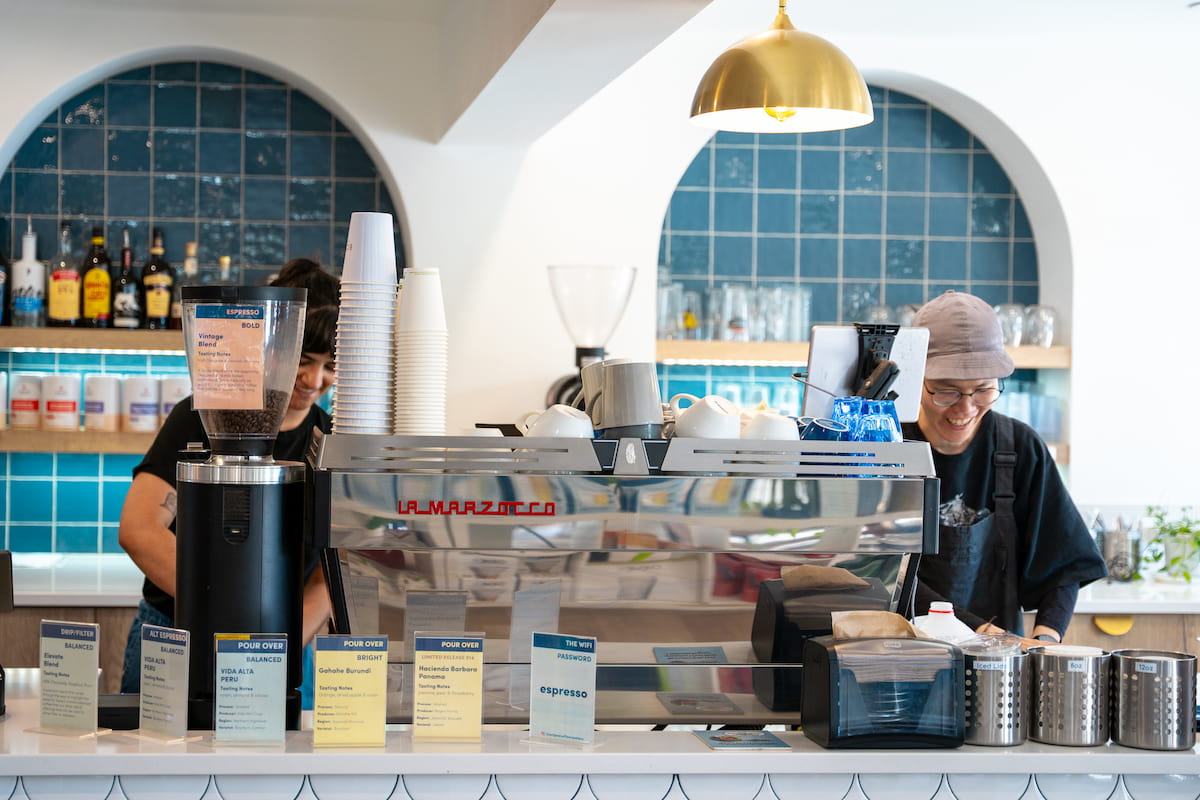
The modern barista is a coffee specialist, especially at specialty coffee shops (but more on that later). They have specialised skills in dosing, grinding, extracting, temperatures, alternative brewing methods, milk steaming, and pouring for latte art. In addition to their technical training, baristas are also extremely knowledgeable in the science behind every cup of coffee.

Is There a Fourth Wave of Coffee?
There isn’t a single, universally agreed upon definition of what “fourth wave” coffee is…or if the “fourth wave” even exists. All it takes is a quick Google search or a handful of conversations with coffee professionals to notice that the industry is still very much undecided on this topic.
Depending who you talk to, fourth wave could refer to:
-
Direct and fairtrade agreements with coffee producers.
-
Signature drinks focused onvirality, viral recipes and viral aesthetics.
-
Coffee as a lifestyle accessory – think luxury brands with in-house coffee stations or cafes with their own run clubs.
-
At-home specialty coffee, defined by higher quality personal espresso machines, single dose grinders, and other “prosumer” equipment.
-
Community-focused pop-ups and mobile setups.
-
Greater automation using smarter equipment that expedites service.
Then again, we may be jumping the gun here. Are we even in the fourth wave yet? Or have we evolved beyond “waves”?
Some are suggesting that coffee has moved from a linear progression altogether.
Instead, the coffee industry might be diverging into multiple, unique segments.
We’re way past waves now. This is the big, wide ocean.
Specialty Coffee: A More Meaningful Term
"Third wave" isn't the term it used to be...and honestly, we think there's a better one, and it's called "specialty coffee."
Specialty coffee is a globally recognized category with a measurable standard behind it. The Specialty Coffee Association formalized a cupping protocol that scores coffee across ten attributes, and any coffee scoring 80 or above out of 100 earns the specialty designation.
If you want to learn about what is (and isn’t) specialty coffee, we have a whole blog post on the subject. You can read about it here.
Third wave coffee is a story still being written, and it starts with the bean. Explore what's in our current rotation →